Himalayan News Hub

EVEREST & SHERPA

Articles • News • Culture

Unleashing the Thrill: Skiing Adventures on Mt. Everest

Dreaming of conquering the world's highest peaks on skis? While there are no official ski resorts on Mt. Everest, the daring journey demands the expertise of a world-class skier and mountaineer. Throughout history, intrepid individuals have dared to ski down this iconic mountain, showcasing remarkable feats of skill and courage.

One legendary descent occurred in 1970, when Yuichiro Miura carved his way down Everest. This gripping adventure is immortalized in the Academy Award-winning documentary, 'The Man Who Skied Down Everest.' Miura's achievement, though not a full-length descent, captured the world's imagination.

Another noteworthy skier, Davorin Karnicar, etched his name in history with an awe-inspiring accomplishment. He spent five hours descending approximately 12,000 feet on the south side, leaving a trail of adrenaline and setting a benchmark for Everest skiing.

So, while Mt. Everest may not boast official ski resorts, the tales of these fearless skiers remind us that the world's highest peaks are not off-limits to those seeking the ultimate skiing adventure."

"Remarkable Achievement: Two-Year-Old British Toddler Conquers Everest Base Camp with Adventurous Family"

In an extraordinary feat, two-year-old Carter Dallas has become the youngest person to reach Everest Base Camp, positioned at a staggering 17,598 feet above sea level. Accompanied by his parents, Ross and Jade Dallas, the 35-year-old father carried Carter on his back throughout the trek. The family, originally from Glasgow, achieved this milestone on October 25, as part of their adventurous one-year trip around Asia. Notably, this achievement marks a new record, surpassing the previous youngest trekker, a four-year-old from the Czech Republic.

"Unveiling the Enigmatic Yeti: A Journey Through Centuries of Mystery and Myth"

Throughout history, the enigmatic Yeti has captivated the imaginations of people, evolving from a regional legend to a global phenomenon. This mystical creature, also known as the 'abominable snowman,' has left an indelible mark on the cultural and religious fabric of the regions it purportedly inhabits.


The roots of the Yeti legend can be traced back to Alexander the Great's conquest of the Indian subcontinent in 326 BC. Legend has it that Alexander, intrigued by tales of the elusive creature, demanded to see a Yeti during his campaign. However, locals, perhaps wisely, refused, asserting that the creature could not survive at lower altitudes. Over the centuries, the legend of the Yeti persisted and diversified, giving rise to distinct types such as the archetypal Meh-teh, the smaller Teh-Ima, and the colossal Dzu-teh or Nyalm, eventually becoming an integral part of Buddhist mythology.


For centuries, the Yeti remained a mysterious and seldom-seen figure, with many local beliefs suggesting that encountering one was an ill omen. However, the 20th century marked a turning point for cryptozoology and the Yeti's fame. Journalist Henry Newman popularized the term 'abominable snowman' in 1921, and in the following decades, reported sightings gained momentum. In 1951, Eric Shipton's discovery of mysterious footprints in the Himalayas, coupled with the subsequent conquest of Everest in 1953, thrust the Yeti into the global spotlight.

The fascination with the Yeti reached such heights that in 1959, the US embassy in Kathmandu issued a memo to the State Department in Washington DC addressing the influx of Yeti-hunters to the Himalayas. The 'Regulations Governing Mountain Climbing Expeditions in Nepal - Relating to Yeti' outlined strict rules, including a permit fee of 5,000 rupees, a prohibition on killing the creature unless in self-defense, and the mandatory surrender of photographs and reports to the authorities. Yeti tourism became a lucrative industry for Nepal, fueled by the enduring mystery surrounding this elusive creature.

Join us on a journey through centuries of mystery and myth as we delve into the history of the Yeti legend, exploring its cultural significance and the tireless quests of those who sought to unravel the secrets of this legendary creature.

A deadly decent on Everest

In a grim turn of events, an Uzbek team discovered Arsientiev high on the North Face, frostbitten and semi-conscious. Despite their hour-long efforts to revive her, they ultimately had to leave. A similar encounter unfolded when Cathy O’Dowd and Ian Woodall crossed paths with Arsientiev during their ascent. Revival attempts proved futile, yet she remained alive. By the third day, passing climbers sadly reported Arsentiev's demise. Nearby lay Sergei's rope and ice ax, but no sign of Sergei himself. His body was discovered years later, lower on the North Face, suggesting a tragic fall while attempting to save his wife

"Savoring Syakpa: A Delicious Culinary Journey into Sherpa Cuisine"

Sherpa culture, nestled within the majestic Himalayas, boasts a rich tapestry of traditions, including a remarkable culinary heritage. Among their array of delightful dishes, Syakpa stands out as a beloved and flavorful soup, steeped in history and tradition.
The Essence of Syakpa Syakpa, a nourishing soup that warms both body and soul, holds a special place in Sherpa households. Its preparation involves a harmonious blend of indigenous spices, locally sourced ingredients, and time-honored cooking techniques.

The Recipe's Heart The heart of Syakpa lies in its simplicity and flexibility. Typically crafted with chunks of meat—commonly yak, mutton, or chicken—alongside an assortment of vegetables such as carrots, radishes, spinach, and the essential addition of handmade flat noodles known as thukpa, Syakpa reflects the Sherpa community's reliance on hearty, sustaining meals to combat the harsh Himalayan climates.
Cultural Significance Beyond its palatability, Syakpa embodies cultural significance. Shared during celebrations, gatherings, and especially to welcome guests, this soup symbolizes hospitality and community bonds within Sherpa culture. Its preparation often involves communal effort, underscoring the spirit of togetherness and sharing that defines Sherpa traditions.

Evolution and Adaptation While preserving its traditional roots, Syakpa has also evolved to accommodate modern influences. Chefs and cooks have experimented with variations, introducing vegetarian renditions or infusing contemporary elements without compromising its authentic essence. This adaptability showcases the resilience and adaptivity inherent in Sherpa cuisine.

Savoring Syakpa: A Culinary Adventure For those seeking to indulge in the Sherpa culinary experience, tasting Syakpa offers a gateway to understanding the warmth, depth, and cultural nuances encapsulated in a single bowl. Whether relished in a traditional Sherpa home, a cozy local eatery, or recreated in one's kitchen using authentic recipes, each sip of Syakpa tells a story steeped in centuries of tradition and a connection to the breathtaking Himalayas.

In Conclusion Syakpa, with its hearty blend of flavors, history, and cultural significance, embodies the essence of Sherpa cuisine. As one delves into this comforting soup, they embark on a sensory journey, discovering not just a dish, but a way of life intricately woven into the fabric of the Himalayan landscape—a culinary experience that transcends taste and transcends time

"Momo: Nepal's Flavorful Heritage Encased in Dumplings

Momo, the beloved dumpling of Nepal, embodies a culinary tradition revered across generations. Crafted from flour dough, packed with savory minced meat or vegetables, and infused with aromatic spices, momo dances between the realms of steamed and fried, accompanied by a tantalizing spicy sauce or a comforting broth. Its allure knows no bounds, captivating palates regardless of age or background.

Tracing its roots to Tibet, momo bore witness to a transformation orchestrated by the enterprising Newar merchants of Kathmandu Valley. Borrowing the art of momo-making from Tibet, they orchestrated a gastronomic revolution, substituting yak or lamb meat with buffalo and enriching the blend with an orchestra of local spices and herbs. Thus emerged "momocha," an ode to steamed indulgence in the Newari language.


From its cradle within the Newar community, momo embarked on a flavorful journey, spreading its essence throughout Nepal's diverse landscapes. Its aromatic embrace extended beyond borders, enchanting the northeastern reaches of India, Himalayan terrains, and resonating across oceans, notably in Australia, where it proudly symbolizes Nepali culture.


Momo, a versatile muse, boasts an array of incarnations—buff, chicken, vegetable, cheese, chocolate, banana—each a testament to creativity and culinary finesse. Its presentation mirrors its versatility: c momo, sadheko momo, fried momo, open momo, tandoori momo, and the exquisite jhol momo—nestled within a spicy achar-infused broth.

Beyond sustenance, momo embodies the essence of Nepali identity and heritage, fostering unity and evoking joy. Unofficially hailed as Nepal's national dish, it serves as a unifying emblem cherished by all who call Nepal home. Momo is not just a delicacy; it's a celebration—a delightful amalgamation of tradition, taste, and togetherness.

Scaling the Heights: Celebrating Everest Day and Humanity's Indomitable Spirit

Every year on May 29th, mountaineers, adventurers, and enthusiasts from around the world gather to celebrate Everest Day, a commemoration of the first successful ascent of Mount Everest. This extraordinary day marks the indomitable human spirit and the relentless pursuit of conquering the highest peaks on our planet. With the majestic Everest as its backdrop, Everest Day is a testament to the triumph of human courage, determination, and the unyielding quest for exploration. Join us as we delve into the significance of Everest Day and the remarkable tales of those who have braved the mighty mountain.
  1. The Historic Triumph of Sir Edmund Hillary and Tenzing Norgay: On May 29, 1953, Sir Edmund Hillary, a New Zealand mountaineer, and Tenzing Norgay, a Sherpa guide from Nepal, etched their names in the annals of history by becoming the first individuals to summit Mount Everest. Their awe-inspiring feat captured the imagination of people worldwide, inspiring countless others to follow in their footsteps. Everest Day honors their audacity, resilience, and the bond of friendship forged atop the world's highest peak.

  2. Paying Homage to the Sherpa Community: Everest Day also serves as an opportunity to recognize the invaluable contributions of the Sherpa community, an ethnic group renowned for their mountaineering expertise and unparalleled support in the Himalayas. Sherpas play an indispensable role in ensuring the safety and success of climbers, serving as guides, porters, and caretakers. Their unwavering dedication and profound connection to the mountains make them an integral part of the Everest legacy.

  3. A Global Gathering of Adventurers: Each year, Everest Day attracts a diverse congregation of mountaineers, adventurers, and nature enthusiasts who congregate at Everest Base Camp to pay homage to the mountain and its conquerors. This vibrant gathering fosters a sense of camaraderie and kinship among individuals with a shared passion for exploration and adventure. It is a time for exchanging stories, sharing experiences, and forging lasting connections amidst the awe-inspiring grandeur of the Himalayas.
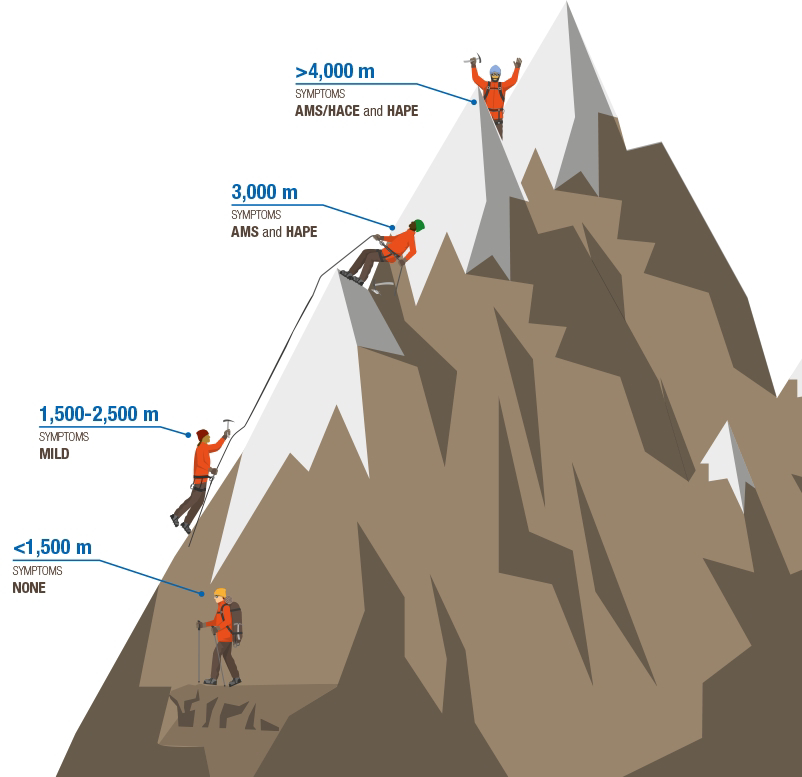
  4. Overcoming Challenges and Inspiring Endeavors: The celebration of Everest Day is a testament to the human spirit's triumph over adversity and the relentless pursuit of personal and collective goals. Mount Everest represents the epitome of challenge, requiring climbers to endure extreme weather conditions, altitude sickness, and physical exhaustion. The tales of perseverance, courage, and determination that emerge from these arduous journeys continue to inspire individuals worldwide to push their own boundaries and strive for greatness.

  5. Environmental Consciousness and Sustainability: As Everest Day gains prominence, there is an increasing emphasis on environmental consciousness and sustainability. The mountaineering community, along with environmental organizations, recognizes the need to protect the fragile ecosystem of the Everest region. Efforts are being made to minimize the environmental impact, promote responsible trekking practices, and raise awareness about the importance of preserving the Himalayan ecosystem for future generations.

 Everest Day stands as a powerful symbol of human ambition, resilience, and the unbreakable bond between mankind and nature. It commemorates the historic achievement of Sir Edmund Hillary and Tenzing Norgay, while also acknowledging the contributions of the Sherpa community and the global mountaineering fraternity. As we celebrate Everest Day, let us remember the invaluable life lessons this mighty mountain imparts: the strength of the human spirit, the beauty of collective endeavor, and the profound importance of preserving and respecting our natural world.

Solo Hungarian Climber Missing in Everest's Hillary Step Area: Search Efforts Underway Amid Challenging Weather Conditions


KATHMANDU, MAY 25 - A Hungarian climber has lost contact in the Hillary Step area above 8,000m on Mount Everest since yesterday. Suhajda Szilard, who embarked on the challenging ascent without supplemental oxygen or personal Sherpa support, is reported missing by the expedition organizer.

Thaneswar Guragai, General Manager at Seven Summit Treks, stated that Szilard was alone during the climb, and his last known location was the Hillary Step. The team had received his GPS tracking record at 8,700m, but there have been no further signals since then.

Szilard, known for his preference for alpine-style climbing, had previously undertaken similar expeditions on Lhotse, K2, and Broadpeak. This time, he had only requested base camp support from the organizers. Guragai mentioned that search efforts for the missing climber are currently underway, although adverse weather conditions have been hampering progress in the higher camps since this morning.

Free Research Preview. ChatGPT may pro

Kamirita Sherpa Sets New Record: Conquers Everest for 28th Time in Historic Achievement

In an astounding feat of mountaineering prowess, Kamirita Sherpa from Solukhumbu has scaled the summit of Everest for the second time within a week. Following his triumphant ascent on Wednesday, June 3, where he reached the peak and returned, Sherpa embarked on another daring climb on Tuesday morning. Today, with his remarkable 28th ascent of Mount Everest, he has established an unparalleled record for conquering the world's highest mountain the most times. This extraordinary achievement places Sherpa in a league of his own, surpassing his own previous record of 27 ascents, which was equaled by Pasang Dawa Sherpa of Solukhumbu's Pangboche. The Sherpa community, led by Migma Sherpa, president of Seven Summit Treks Pvt., stands in awe of these two exceptional climbers, who have elevated the art of mountaineering to new heights.

Search for Missing Sherpa Climbers Yields No Results After Avalanche in Khumbu Icefall Region

On Wednesday morning, an avalanche occurred between Everest Base Camp and Camp I, causing three Sherpa climbers to go missing in the Khumbu icefall region. Despite search and rescue teams dispatched to the scene, no progress has been made in locating the missing climbers. The search operations are still underway by a combined team of Imagine Nepal, Himalayan Rescue (HRA) Nepal, and the Sagarmatha Pollution Control Committee (SPCC), but bad weather and thick layers of snow have hindered the search process.

According to Yogesh Sapkota, marketing chief of Simrik Air, a helicopter dispatched to assist in the search operation has also not been able to provide any additional information due to the difficult search conditions. The missing climbers are identified as Da Chiri Sherpa, Pemba Tenzin Sherpa, and Lakpa Rita Sherpa, and are residents of Khumbu Pasang Lhamu Rural Municipality 5.

Despite the ongoing search and rescue operations, the process of route fixing to the summit of Mt Sagarmatha will continue. The Department of Tourism will hold discussions before making any further decisions on the search mission. With the spring climbing season in full swing, as many as 243 climbers have received permission to climb the world's tallest peak, including 41 women and 202 men. The total royalties collected this season for issuing permits to climb Mt Sagarmatha alone exceeds Rs 334 million.

"Tragedy Strikes as Three Sherpa Climbers Go Missing in Everest's Treacherous Icefall Route"

Three Sherpa climbers have gone missing in a crevasse on their way to Camp I from the base camp, according to a source at the base camp.

The incident occurred when the icefall route collapsed between Camp I and the base camp, as the climbers were carrying expedition logistics. Efforts are underway to search and rescue the missing climbers, as the treacherous conditions of the icefall pose a serious challenge. This latest incident highlights the dangers faced by Sherpa climbers and the ongoing risks involved in scaling the world's highest peak.

Japanese tourist missing in Solukhumbu-Sagarmatha region

A Japanese tourist who was visiting the Solukhumbu region, including Sagarmatha (Mt. Everest), has been missing since Chaitra 8 (March 22). The district police office in Solukhumbu has informed that 54-year-old Hitoshi Ishiba, who entered the Khumbu area without a guide, has gone missing.

According to Ram Kishor Shah, a spokesperson for the police office, Ishiba was last seen entering the checkpoint of Namche Chekpost in ward number 5 of Khumbu Pasang Lhamu Rural Municipality on Chaitra 8. On the same night, he stayed at the Chukung Resort in ward number 4 of the rural municipality and expressed his intention to go to Lobuche from there on Chaitra 9, saying he was going for a walk. However, he has not been heard from since, and news of his disappearance was reported to the police through the embassy as he was out of contact.

Temporary police posts in Dingboche and locals searched for him, but the district police office in Solukhumbu has been informed that the search has been intensified

Solo Trekkers are allow in Khumbu pasang Lhamu Municipality


Khumbu pasang lhamu Municipality has reversed Nepal Tourism Board decision to ban "solo trekking" in the Sagarmatha region, including the Everest Base Camp Trek. Khumbu Pasang Lhamu Rural Municipality has issued a notice stating that a trekking guide is not mandatory for trekkers in this area. The board and local authorities have come to an agreement, with the board stating that it will not allow free individual trekkers (FITs) to trek across the country. This decision will become mandatory for all trekkers starting from April. The board is committed to ensuring the safety, exploration, and recovery of tourists, and has decided to stop solo trekking to make it easier to locate and rescue tourists in case of accidents.

However, the Khumbu Pasang Lhamu Rural Municipality has said that a guide is not mandatory for trekking in the area, but it has advised trekkers to take a guide for their safety during high-altitude trekking. According to the board's decision, all trekkers must travel with a trekking guide from April, and the board will issue a trekking information management system (TIMS) card at a fixed price to all trekkers who need it. But, the local authorities will issue a trekking card costing NPR 2,000 for trekkers in the Khumbu region.

National Parks have also increased the entry fee for foreigners to NPR 3,000, while local tourists will have to pay NPR 1,000. The government has also increased the rescue insurance fee to NPR 1,000 for local tourists and NPR 4,000 for foreign tourists. The decision was made to cover the cost of rescuing injured tourists in the mountainous regions

Nepal's Civil Aviation Authority suspends three pilots, including one for 'negative conversation' with ATC


Kathmandu, 9 Chaitra - The Civil Aviation Authority of Nepal has suspended three pilots, including one from Annapurna Helicopter, for allegedly violating aviation safety standards. The pilot from Annapurna Helicopter reportedly had a 'negative conversation' with the Lukla tower during a flight.

According to sources, the pilot did not provide correct information to the air traffic controller (ATC). The Authority suspended the three pilots from their respective companies on Thursday. The other two pilots are from Air Dynasty and Fishtail Air, who were allegedly flying a helicopter in the 'Paragliding Zone' in Pokhara.

The Authority has summoned all three pilots to issue a statement. Information officer Jnanendra Bhul informed that a decision regarding the pilots will be made only after receiving their statements.

*Note: The mention of inappropriate language used by the pilot in the previous news has been removed

Foreign Tourist Dies Due to altitude Sickness in Solukhumbu Region

A 68-year-old slovakian tourist lost his life while trekking in the Solukhumbu region of Nepal. The incident occurred on Monday night in the Gorak Shep area of Khumbu Pasanglhamu Rural Municipality-4. According to the District Police Office, Solukhumbu, the tourist died due to altitude Sickness.


The police inspector and information officer, Ram Kishor Sah, informed that the region has been facing difficulties in rescue operations due to continuous snowfall. The communication services in the area have also been affected by the heavy snowfall.

The deceased tourist had come to Nepal for traditional adventure activities, including Himalayan mountaineering. He was staying at the Himalayan Hotel in Khumbu Pasanglhamu Rural Municipality-4. The Deputy Superintendent of Police, Dipak Shrestha, informed that the tourist was found dead in his room.

The group of 13 tourists, including the deceased, had entered the Namche area on Chaitra 1. However, due to adverse weather conditions, the rescue operation faced difficulties in retrieving the body. The police have stated that the rescue operation in the Khumbu region is possible only by helicopter on Wednesdays during the snowfall.

This incident highlights the importance of safety precautions for tourists traveling to remote regions of Nepal. It is also a reminder of the need for adequate measures to be taken to ensure the safety of foreign tourists during adventure activities.

"The Sherpa-Everest Connection: Exploring the Relationship between the World's Most Famous Mountain and Its Legendary Guides"

Introduction: Mount Everest, the highest peak in the world, has long been a symbol of human achievement and adventure. But behind every successful ascent of Everest lies the expertise and dedication of the Sherpa people, who have been guiding climbers up the mountain for over a century. In this article, we will explore the unique relationship between the Sherpa and Everest, and the important role that Sherpas have played in the history of mountaineering.


The Sherpa People: The Sherpa people are an ethnic group who live in the Himalayas of Nepal, Tibet, and India. They have a deep cultural and spiritual connection to the mountains, and their skills as mountaineers are legendary. Sherpas have been working as guides for Western mountaineers since the early 20th century, and their expertise and knowledge of the terrain has been critical to the success of countless expeditions.

The History of Everest: Mount Everest was first climbed by Sir Edmund Hillary and Tenzing Norgay, a Sherpa guide, in 1953. Since then, thousands of climbers have attempted to summit the mountain, many of them guided by Sherpas. The Sherpas have played an essential role in the history of Everest, from carrying equipment and supplies up the mountain to setting fixed ropes and helping climbers acclimate to the high altitude.


The Sherpa-Everest Connection: The connection between the Sherpa and Everest runs deep. Sherpas have a spiritual connection to the mountain, which they call Chomolungma, and many consider it to be a sacred place. They also have a deep understanding of the dangers and challenges of climbing at high altitude, and their knowledge and experience have been critical to the success of many expeditions.

The Future of Sherpa-Everest Relations: As interest in climbing Everest continues to grow, the role of Sherpas in guiding climbers up the mountain has become increasingly important. However, the Sherpa community has faced numerous challenges in recent years, including low wages, dangerous working conditions, and a lack of recognition for their contributions to mountaineering. As we move forward, it is essential that we recognize and support the vital role that Sherpas play in climbing Everest, and work to ensure their safety and well-being.


Conclusion: The Sherpa-Everest connection is a unique and important part of the history of mountaineering. The dedication and expertise of the Sherpa people have been essential to the success of countless expeditions up the world's highest mountain. As we continue to explore new frontiers in mountaineering, it is essential that we recognize and respect the vital role that Sherpas play in this challenging and rewarding pursuit.


One of the most famous groups of icefall doctors is the Khumbu Icefall Doctors

 Icefall doctors are a group of specialized mountaineers who are responsible for creating safe routes through treacherous icefalls on high-altitude mountains. They are often considered as the unsung heroes of mountaineering, as their work is essential for the safety of climbers who attempt to summit some of the world's tallest peaks.Icefall doctors work in some of the most extreme environments on the planet, including the Himalayas, the Andes, and other high-altitude mountain ranges. Their job is to scout out the safest and most efficient routes through dangerous icefalls, which can include crevasses, seracs, and other hazards.To become an icefall doctor, one must have extensive mountaineering experience and training, as well as a deep understanding of glaciology and the behavior of ice. Many icefall doctors are also skilled climbers and have summited some of the world's tallest peaks themselves.


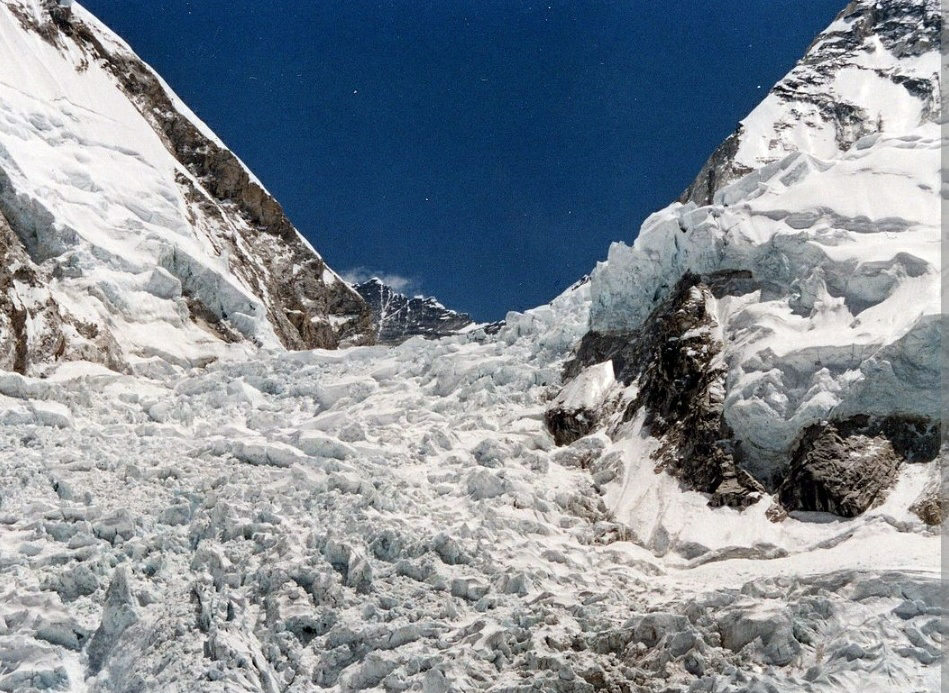
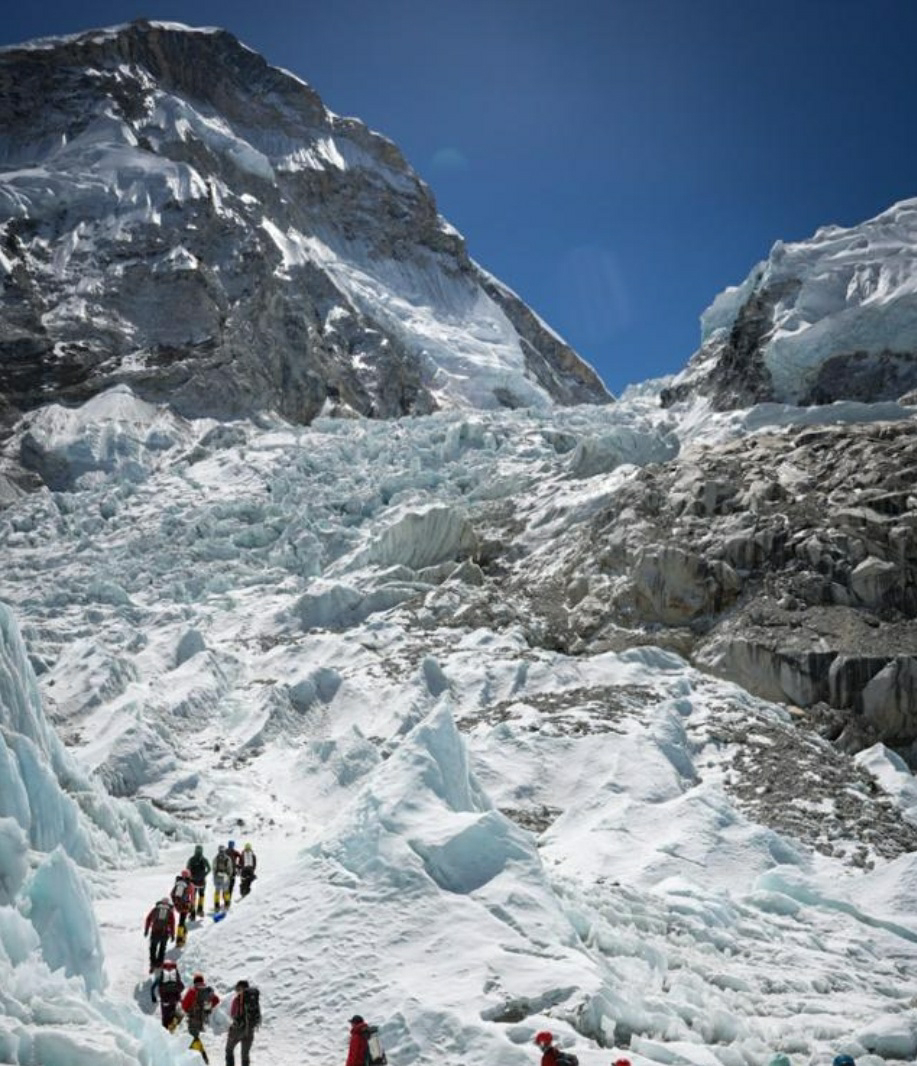
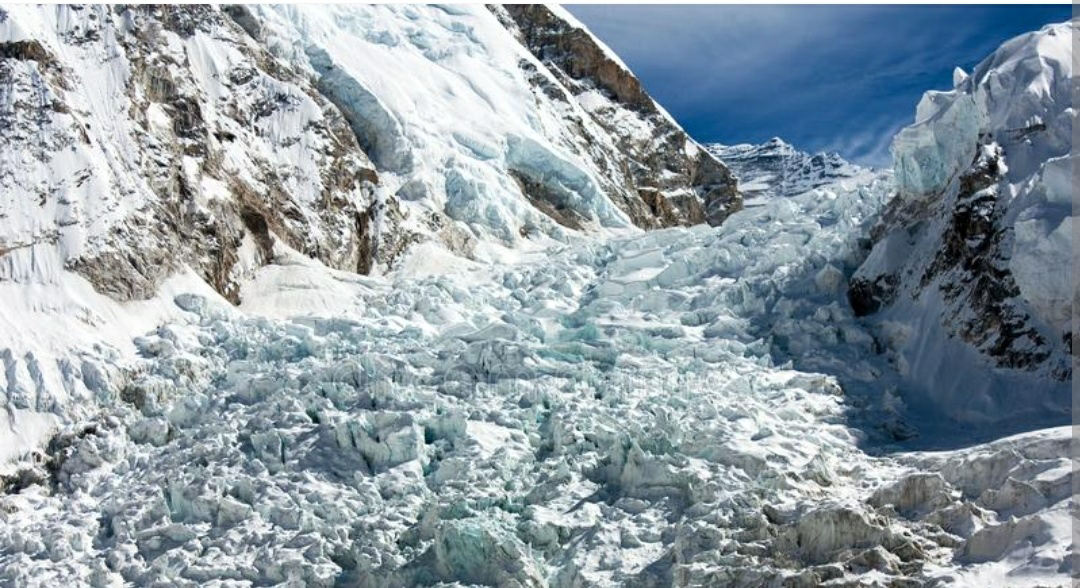
One of the most famous groups of icefall doctors is the Khumbu Icefall Doctors, who work on Mount Everest. The Khumbu Icefall is one of the most dangerous sections of the climb, with seracs that can collapse at any moment and crevasses that can swallow climbers whole. The Khumbu Icefall Doctors are responsible for finding the safest route through the icefall, setting up ladders and ropes, and maintaining the route throughout the climbing season.The work of icefall doctors is essential for the safety of climbers, as a safe route through an icefall can mean the difference between life and death. Without icefall doctors, climbers would be forced to navigate these treacherous areas on their own, which would be an extremely dangerous proposition.

Icefall doctors also play a key role in the development of new routes on high-altitude mountains. They are often the first to scout out new areas and can provide valuable information on the terrain and the best ways to approach it. This information is then used by climbers and mountaineers to develop new routes and make ascents that were previously thought impossible.

In conclusion, icefall doctors are an essential part of the mountaineering world. Their specialized skills and knowledge of high-altitude ice and snow make them invaluable to climbers attempting to summit some of the world's tallest peaks. They work in some of the most extreme environments on the planet, often risking their own lives to ensure the safety of others. Their contributions to the world of mountaineering cannot be overstated, and they deserve recognition and appreciation for the vital work that they do.

"The Most Dangerous Peaks: Exploring the Deadliest Mountains in the World"


Mountains are some of the most awe-inspiring natural wonders in the world. They offer stunning views, challenging hikes, and a sense of accomplishment for those who summit their peaks. However, mountains can also be incredibly dangerous, and each year, climbers and adventurers are lost on some of the world's deadliest peaks. From avalanches to altitude sickness, there are many factors that make certain mountains particularly hazardous.

Here are some of the most dangerous mountains in the world:


  1. Mount Everest: The tallest peak on Earth, Mount Everest attracts hundreds of climbers each year who seek to reach its summit. However, the harsh conditions and high altitude make this mountain extremely dangerous. From avalanches to altitude sickness, the risks are many and the death toll continues to rise.


2. K2: Known as the "Savage Mountain," K2 is considered one of the most difficult peaks to climb in the world. With a high fatality rate and unpredictable weather, K2 is one of the deadliest peaks in the world.


3.Nanga Parbat: This Himalayan mountain is known for its steep and icy slopes, making it one of the most dangerous peaks in the world. Nanga Parbat is also infamous for its frequent avalanches, which have claimed the lives of many climbers


4.Annapurna: This peak in the Himalayas is another incredibly dangerous mountain, with a high fatality rate and a challenging climbing route. Annapurna has been the site of many tragedies, and its slopes are considered some of the most dangerous in the world.


5.Mount McKinley: Located in Alaska, Mount McKinley is the tallest peak in North America. Despite its relatively low altitude, McKinley is one of the deadliest peaks in the world, with a high risk of avalanches, crevasses, and other hazards.

These peaks represent just a few of the deadliest mountains in the world. While they offer an incredible sense of adventure and accomplishment, they also pose significant risks to those who seek to climb them. Whether you are a seasoned mountaineer or a beginner, it's important to understand the dangers involved with climbing and to approach these peaks with caution.

In conclusion, while the allure of these deadly peaks can be irresistible, it's important to respect their power and to understand the risks involved. Whether you're a seasoned climber or a beginner, always make sure to take the necessary precautions, plan ahead, and be prepared for anything that the mountain may throw your way.

The Uniting of Sherpa and Gyalpo Loshar: A Cultural Connection


The traditional festival of Gyalpo Loshar is celebrated in the Everest region of Nepal every year and is deeply rooted in the culture of the Sherpa people. It is a celebration that unites the Sherpa people and the Gyalpo Loshar, a mystical figure believed to be the guardian of the Himalayas.
Gyalpo Loshar has been an integral part of Sherpa culture for centuries. It is believed that each year, the Sherpas gather on the day of the full moon in the month of December to honor him. During this day, the Sherpas offer prayers and offerings to Gyalpo Loshar. They also perform traditional songs and dances to honor him and ask for his blessings.
The festival is an important part of the Sherpa people’s identity and culture. It serves to strengthen the bond between the Sherpa people and their environment. It also provides a sense of unity and belonging among the Sherpa people.
The celebration of Gyalpo Loshar is also seen as a way to reaffirm the Sherpa’s spiritual connection to the Himalayas. 

Wild honey Hunting and its Culture in Nepal


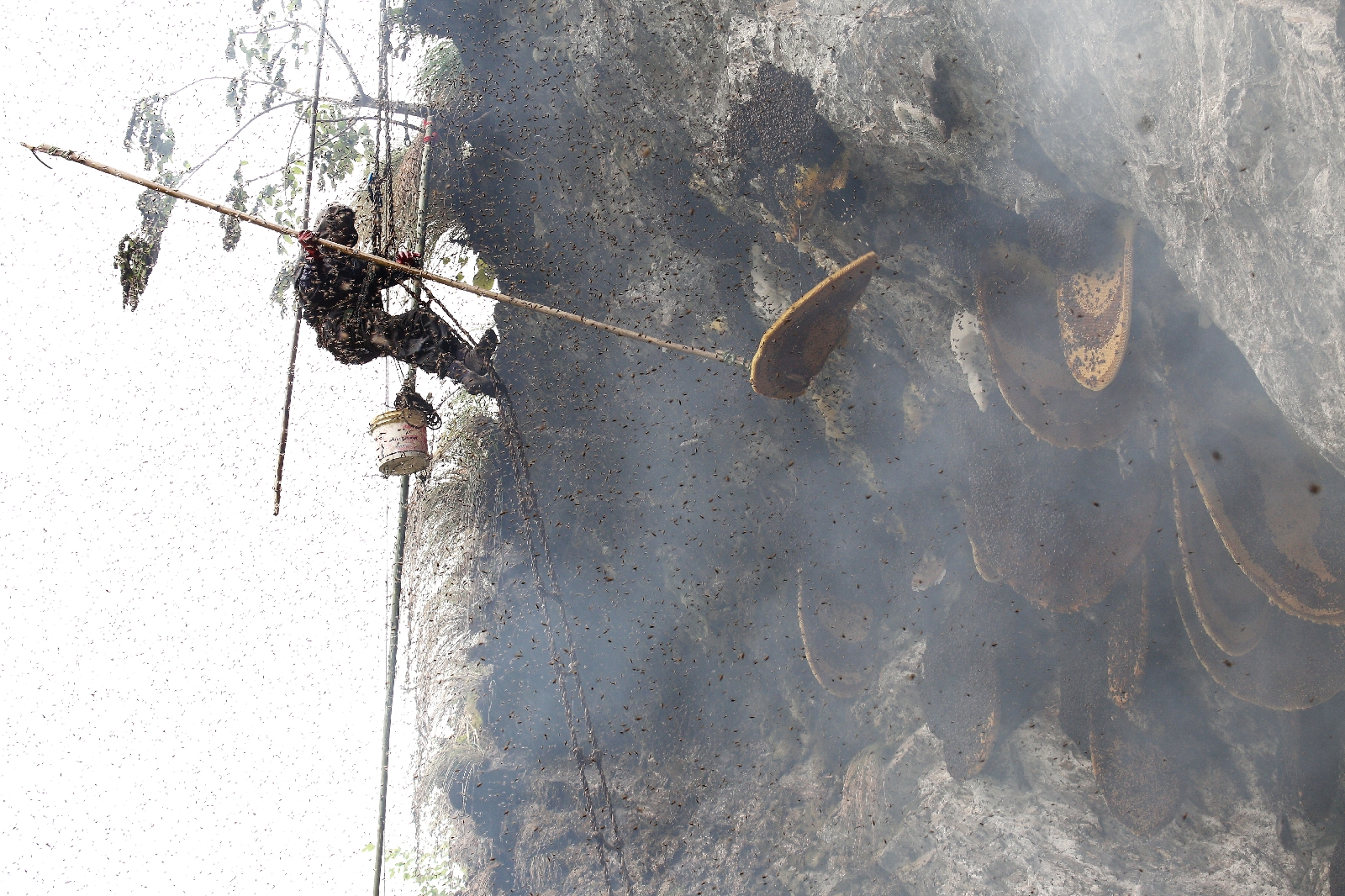
Honey hunting in Nepal is an ancient tradition that has been passed down for generations. Honey hunters in Nepal use traditional methods to harvest honey from the wild. This is done by scaling tall trees or cliffs and using smoke to drive away bees. The honey is then collected in a pot or bucket.
In Nepal, honey hunting is still practised in some parts of the country, mostly in rural areas. It is a seasonal activity and is done during the months of April and May when the wild honeybees are most active. The honey collected is used for consumption and also for medicinal purposes. Due to the decline in wild honeybees in Nepal, honey hunting is becoming increasingly difficult and the amount of honey harvested has decreased. 

In order to protect wild honeybees and promote honey hunting, the Government of Nepal has established the Apiculture Development Centre. This centre provides training and support to honey hunters and beekeepers. It also works to protect bee colonies and promote sustainable beekeeping practices. 

Despite the efforts of the government, honey hunting remains a difficult and dangerous activity in Nepal. The high altitude and the steep slopes of the Himalayas present a challenge to honey hunters, who have to scale tall trees and cliffs to access the honey. Furthermore,
ADSENSE MID SLOT