"Remarkable Achievement: Two-Year-Old British Toddler Conquers Everest Base Camp with Adventurous Family"

Throughout history, the enigmatic Yeti has captivated the imaginations of people, evolving from a regional legend to a global phenomenon. This mystical creature, also known as the 'abominable snowman,' has left an indelible mark on the cultural and religious fabric of the regions it purportedly inhabits.

The roots of the Yeti legend can be traced back to Alexander the Great's conquest of the Indian subcontinent in 326 BC. Legend has it that Alexander, intrigued by tales of the elusive creature, demanded to see a Yeti during his campaign. However, locals, perhaps wisely, refused, asserting that the creature could not survive at lower altitudes. Over the centuries, the legend of the Yeti persisted and diversified, giving rise to distinct types such as the archetypal Meh-teh, the smaller Teh-Ima, and the colossal Dzu-teh or Nyalm, eventually becoming an integral part of Buddhist mythology.

For centuries, the Yeti remained a mysterious and seldom-seen figure, with many local beliefs suggesting that encountering one was an ill omen. However, the 20th century marked a turning point for cryptozoology and the Yeti's fame. Journalist Henry Newman popularized the term 'abominable snowman' in 1921, and in the following decades, reported sightings gained momentum. In 1951, Eric Shipton's discovery of mysterious footprints in the Himalayas, coupled with the subsequent conquest of Everest in 1953, thrust the Yeti into the global spotlight.
The fascination with the Yeti reached such heights that in 1959, the US embassy in Kathmandu issued a memo to the State Department in Washington DC addressing the influx of Yeti-hunters to the Himalayas. The 'Regulations Governing Mountain Climbing Expeditions in Nepal - Relating to Yeti' outlined strict rules, including a permit fee of 5,000 rupees, a prohibition on killing the creature unless in self-defense, and the mandatory surrender of photographs and reports to the authorities. Yeti tourism became a lucrative industry for Nepal, fueled by the enduring mystery surrounding this elusive creature.
Join us on a journey through centuries of mystery and myth as we delve into the history of the Yeti legend, exploring its cultural significance and the tireless quests of those who sought to unravel the secrets of this legendary creature.

In a grim turn of events, an Uzbek team discovered Arsientiev high on the North Face, frostbitten and semi-conscious. Despite their hour-long efforts to revive her, they ultimately had to leave. A similar encounter unfolded when Cathy O’Dowd and Ian Woodall crossed paths with Arsientiev during their ascent. Revival attempts proved futile, yet she remained alive. By the third day, passing climbers sadly reported Arsentiev's demise. Nearby lay Sergei's rope and ice ax, but no sign of Sergei himself. His body was discovered years later, lower on the North Face, suggesting a tragic fall while attempting to save his wife



The Historic Triumph of Sir Edmund Hillary and Tenzing Norgay: On May 29, 1953, Sir Edmund Hillary, a New Zealand mountaineer, and Tenzing Norgay, a Sherpa guide from Nepal, etched their names in the annals of history by becoming the first individuals to summit Mount Everest. Their awe-inspiring feat captured the imagination of people worldwide, inspiring countless others to follow in their footsteps. Everest Day honors their audacity, resilience, and the bond of friendship forged atop the world's highest peak.
Paying Homage to the Sherpa Community: Everest Day also serves as an opportunity to recognize the invaluable contributions of the Sherpa community, an ethnic group renowned for their mountaineering expertise and unparalleled support in the Himalayas. Sherpas play an indispensable role in ensuring the safety and success of climbers, serving as guides, porters, and caretakers. Their unwavering dedication and profound connection to the mountains make them an integral part of the Everest legacy.
A Global Gathering of Adventurers: Each year, Everest Day attracts a diverse congregation of mountaineers, adventurers, and nature enthusiasts who congregate at Everest Base Camp to pay homage to the mountain and its conquerors. This vibrant gathering fosters a sense of camaraderie and kinship among individuals with a shared passion for exploration and adventure. It is a time for exchanging stories, sharing experiences, and forging lasting connections amidst the awe-inspiring grandeur of the Himalayas.
Overcoming Challenges and Inspiring Endeavors: The celebration of Everest Day is a testament to the human spirit's triumph over adversity and the relentless pursuit of personal and collective goals. Mount Everest represents the epitome of challenge, requiring climbers to endure extreme weather conditions, altitude sickness, and physical exhaustion. The tales of perseverance, courage, and determination that emerge from these arduous journeys continue to inspire individuals worldwide to push their own boundaries and strive for greatness.
Environmental Consciousness and Sustainability: As Everest Day gains prominence, there is an increasing emphasis on environmental consciousness and sustainability. The mountaineering community, along with environmental organizations, recognizes the need to protect the fragile ecosystem of the Everest region. Efforts are being made to minimize the environmental impact, promote responsible trekking practices, and raise awareness about the importance of preserving the Himalayan ecosystem for future generations.
Everest Day stands as a powerful symbol of human ambition, resilience, and the unbreakable bond between mankind and nature. It commemorates the historic achievement of Sir Edmund Hillary and Tenzing Norgay, while also acknowledging the contributions of the Sherpa community and the global mountaineering fraternity. As we celebrate Everest Day, let us remember the invaluable life lessons this mighty mountain imparts: the strength of the human spirit, the beauty of collective endeavor, and the profound importance of preserving and respecting our natural world.
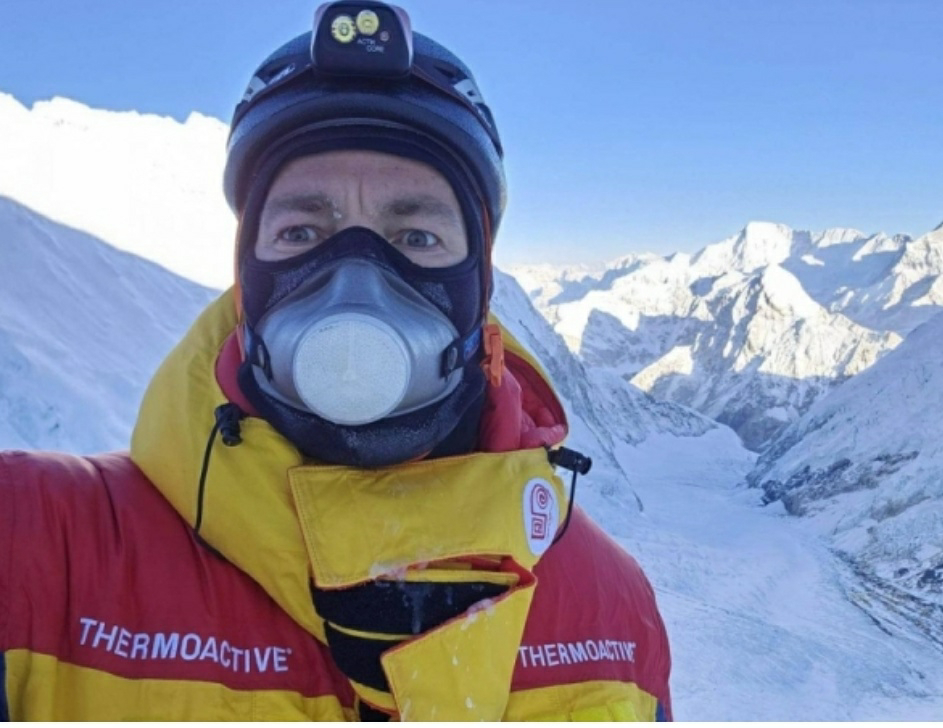
KATHMANDU, MAY 25 - A Hungarian climber has lost contact in the Hillary Step area above 8,000m on Mount Everest since yesterday. Suhajda Szilard, who embarked on the challenging ascent without supplemental oxygen or personal Sherpa support, is reported missing by the expedition organizer.
Thaneswar Guragai, General Manager at Seven Summit Treks, stated that Szilard was alone during the climb, and his last known location was the Hillary Step. The team had received his GPS tracking record at 8,700m, but there have been no further signals since then.
Szilard, known for his preference for alpine-style climbing, had previously undertaken similar expeditions on Lhotse, K2, and Broadpeak. This time, he had only requested base camp support from the organizers. Guragai mentioned that search efforts for the missing climber are currently underway, although adverse weather conditions have been hampering progress in the higher camps since this morning.


