Himalayan News Hub

EVEREST & SHERPA

Articles • News • Culture

One of the most famous groups of icefall doctors is the Khumbu Icefall Doctors

 Icefall doctors are a group of specialized mountaineers who are responsible for creating safe routes through treacherous icefalls on high-altitude mountains. They are often considered as the unsung heroes of mountaineering, as their work is essential for the safety of climbers who attempt to summit some of the world's tallest peaks.Icefall doctors work in some of the most extreme environments on the planet, including the Himalayas, the Andes, and other high-altitude mountain ranges. Their job is to scout out the safest and most efficient routes through dangerous icefalls, which can include crevasses, seracs, and other hazards.To become an icefall doctor, one must have extensive mountaineering experience and training, as well as a deep understanding of glaciology and the behavior of ice. Many icefall doctors are also skilled climbers and have summited some of the world's tallest peaks themselves.


One of the most famous groups of icefall doctors is the Khumbu Icefall Doctors, who work on Mount Everest. The Khumbu Icefall is one of the most dangerous sections of the climb, with seracs that can collapse at any moment and crevasses that can swallow climbers whole. The Khumbu Icefall Doctors are responsible for finding the safest route through the icefall, setting up ladders and ropes, and maintaining the route throughout the climbing season.The work of icefall doctors is essential for the safety of climbers, as a safe route through an icefall can mean the difference between life and death. Without icefall doctors, climbers would be forced to navigate these treacherous areas on their own, which would be an extremely dangerous proposition.

Icefall doctors also play a key role in the development of new routes on high-altitude mountains. They are often the first to scout out new areas and can provide valuable information on the terrain and the best ways to approach it. This information is then used by climbers and mountaineers to develop new routes and make ascents that were previously thought impossible.

In conclusion, icefall doctors are an essential part of the mountaineering world. Their specialized skills and knowledge of high-altitude ice and snow make them invaluable to climbers attempting to summit some of the world's tallest peaks. They work in some of the most extreme environments on the planet, often risking their own lives to ensure the safety of others. Their contributions to the world of mountaineering cannot be overstated, and they deserve recognition and appreciation for the vital work that they do.

"The Most Dangerous Peaks: Exploring the Deadliest Mountains in the World"


Mountains are some of the most awe-inspiring natural wonders in the world. They offer stunning views, challenging hikes, and a sense of accomplishment for those who summit their peaks. However, mountains can also be incredibly dangerous, and each year, climbers and adventurers are lost on some of the world's deadliest peaks. From avalanches to altitude sickness, there are many factors that make certain mountains particularly hazardous.

Here are some of the most dangerous mountains in the world:


  1. Mount Everest: The tallest peak on Earth, Mount Everest attracts hundreds of climbers each year who seek to reach its summit. However, the harsh conditions and high altitude make this mountain extremely dangerous. From avalanches to altitude sickness, the risks are many and the death toll continues to rise.


2. K2: Known as the "Savage Mountain," K2 is considered one of the most difficult peaks to climb in the world. With a high fatality rate and unpredictable weather, K2 is one of the deadliest peaks in the world.


3.Nanga Parbat: This Himalayan mountain is known for its steep and icy slopes, making it one of the most dangerous peaks in the world. Nanga Parbat is also infamous for its frequent avalanches, which have claimed the lives of many climbers


4.Annapurna: This peak in the Himalayas is another incredibly dangerous mountain, with a high fatality rate and a challenging climbing route. Annapurna has been the site of many tragedies, and its slopes are considered some of the most dangerous in the world.


5.Mount McKinley: Located in Alaska, Mount McKinley is the tallest peak in North America. Despite its relatively low altitude, McKinley is one of the deadliest peaks in the world, with a high risk of avalanches, crevasses, and other hazards.

These peaks represent just a few of the deadliest mountains in the world. While they offer an incredible sense of adventure and accomplishment, they also pose significant risks to those who seek to climb them. Whether you are a seasoned mountaineer or a beginner, it's important to understand the dangers involved with climbing and to approach these peaks with caution.

In conclusion, while the allure of these deadly peaks can be irresistible, it's important to respect their power and to understand the risks involved. Whether you're a seasoned climber or a beginner, always make sure to take the necessary precautions, plan ahead, and be prepared for anything that the mountain may throw your way.

The Uniting of Sherpa and Gyalpo Loshar: A Cultural Connection


The traditional festival of Gyalpo Loshar is celebrated in the Everest region of Nepal every year and is deeply rooted in the culture of the Sherpa people. It is a celebration that unites the Sherpa people and the Gyalpo Loshar, a mystical figure believed to be the guardian of the Himalayas.
Gyalpo Loshar has been an integral part of Sherpa culture for centuries. It is believed that each year, the Sherpas gather on the day of the full moon in the month of December to honor him. During this day, the Sherpas offer prayers and offerings to Gyalpo Loshar. They also perform traditional songs and dances to honor him and ask for his blessings.
The festival is an important part of the Sherpa people’s identity and culture. It serves to strengthen the bond between the Sherpa people and their environment. It also provides a sense of unity and belonging among the Sherpa people.
The celebration of Gyalpo Loshar is also seen as a way to reaffirm the Sherpa’s spiritual connection to the Himalayas. 

Wild honey Hunting and its Culture in Nepal


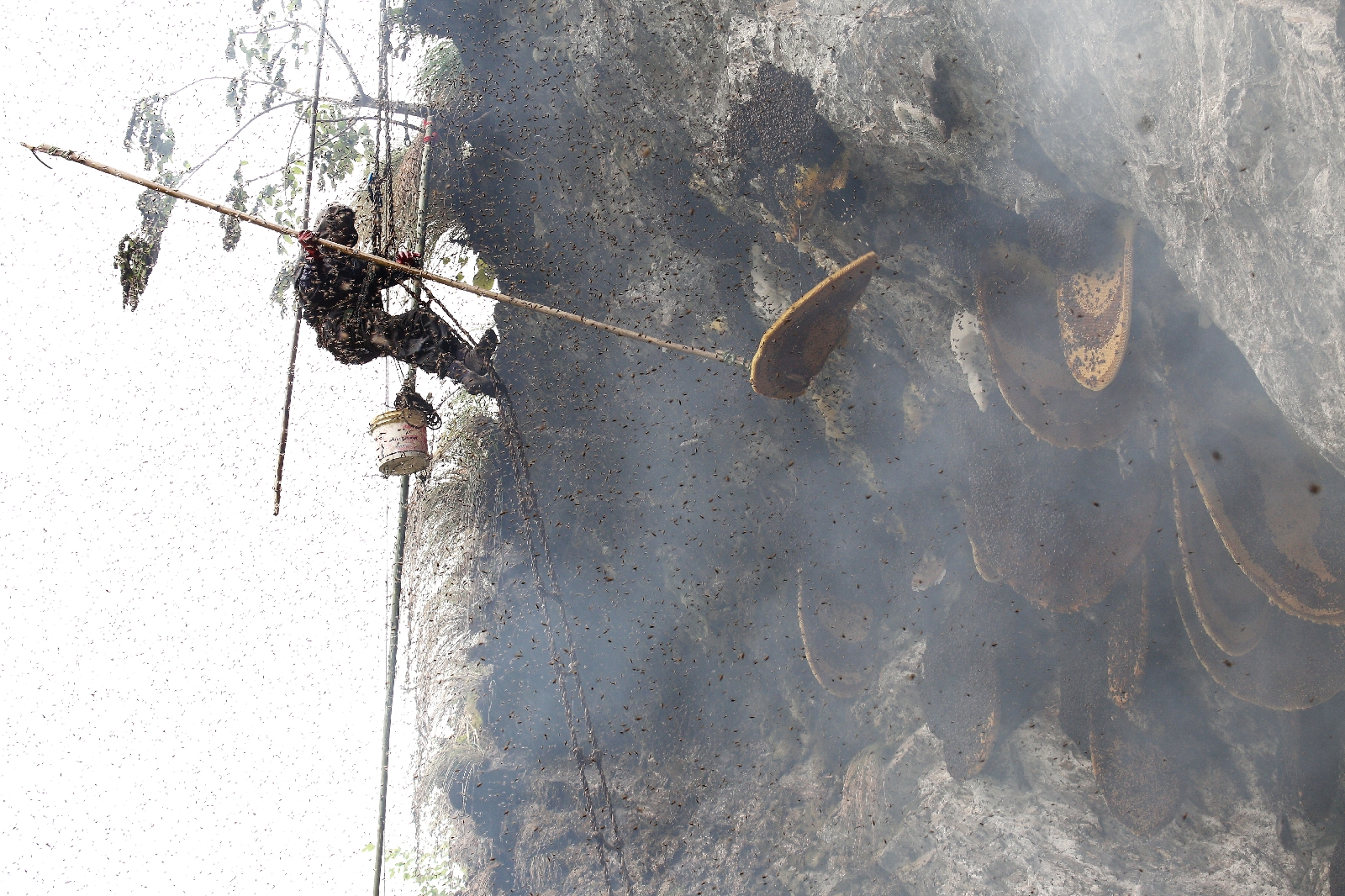
Honey hunting in Nepal is an ancient tradition that has been passed down for generations. Honey hunters in Nepal use traditional methods to harvest honey from the wild. This is done by scaling tall trees or cliffs and using smoke to drive away bees. The honey is then collected in a pot or bucket.
In Nepal, honey hunting is still practised in some parts of the country, mostly in rural areas. It is a seasonal activity and is done during the months of April and May when the wild honeybees are most active. The honey collected is used for consumption and also for medicinal purposes. Due to the decline in wild honeybees in Nepal, honey hunting is becoming increasingly difficult and the amount of honey harvested has decreased. 

In order to protect wild honeybees and promote honey hunting, the Government of Nepal has established the Apiculture Development Centre. This centre provides training and support to honey hunters and beekeepers. It also works to protect bee colonies and promote sustainable beekeeping practices. 

Despite the efforts of the government, honey hunting remains a difficult and dangerous activity in Nepal. The high altitude and the steep slopes of the Himalayas present a challenge to honey hunters, who have to scale tall trees and cliffs to access the honey. Furthermore,

Second press release by Yeti airlines

Accordingly, on January 15, 2079, we would like to inform you that 9N-ANC, ATR-72 500 aircraft of Yeti Airlines, which flew from Kathmandu to Pokhara at 10:32 in the morning, crashed while landing at Pokhara International Airport. There are 72 passengers including 4 crew members in the aircraft. Among them are 53 Nepalese, 5 Indians, 4 Russians, 2 Koreans, 1 Argentine, 1 Australian, 1 Irish and 1 French citizen.

So far, 29 people have died in the accident. Of which 18 are male, 10 are male

Female, 1 child. Nepali Army, Armed Police Force, Airport Rescue and Fire Fighting at the accident site

And the rescue work is going on with the team of Nepal Police.

We will provide more information through the next press release.

Yeti Airlines 9N-ANC plane crash in Pokhara: Efforts to recover 14 dead bodies found in Seti Khonch continue

At 10:30 in the morning, the 9N-ANC plane that flew from Kathmandu to Pokhara, while landing at Pokhara International Airport, crashed at Seti's gorge in Nayagaon, between the old airport and the new airport.

SP KC said that 14 dead bodies were found in Seti Khonch but it was difficult to get them out and the efforts to get them out were going on.

On Sunday morning, the plane crashed near the Pokhara International Airport in Nayagaon Khonch. There were 72 people on board, including 68 passengers and 4 crew members

The Yeti plane that had an accident was the first plane to land at the Pokhara International Airport. The plane was flown by senior captain Kamal KC of Yeti Airlines. Captain Casey is also an instructor pilot. He made the first demo flight at Pokhara International Airport from this aircraft. This is the first incident where a 72-passenger ATR aircraft has crashed in Nepal.

Conquering Everest: The Unsung Heroes of High-Altitude Mountaineering

Mount Everest, the highest peak in the world at 8,848 meters (29,029 feet), has long been a symbol of human determination and endurance. While the mountain is known globally, the contributions of the Sherpa people, who have played a crucial role in the successful ascents of countless climbers, are often overlooked.

The Sherpas, an ethnic group native to the Solu-Khumbu region of Nepal, have a long history of living and working in the high altitude of the Himalayas. They are known for their physical strength, endurance, and adaptability to extreme environments, traits that have made them invaluable to mountaineers attempting to reach the summit of Everest.

For decades, Sherpas have served as guides, porters, and support staff for climbing expeditions to the mountain. They are responsible for setting up camp, fixing ropes, and carrying supplies up the mountain, often at great personal risk. Despite their important contributions, Sherpas are often underpaid and undervalued, with little recognition for the dangers they face on a daily basis.

One such danger is the risk of altitude sickness, a condition that can be fatal at high elevations. Sherpas are trained to recognize the symptoms of altitude sickness and take the necessary precautions to prevent it, but they are not immune to the effects of the thin air. In 2014, 16 Sherpas lost their lives in an avalanche on the mountain, highlighting the inherent risks of high-altitude mountaineering.


Despite these challenges, the Sherpas continue to play a vital role in the success of climbing expeditions to Everest. Without their hard work and dedication, it is unlikely that the mountain would have been conquered as many times as it has been.

It is time for the world to acknowledge and appreciate the contributions of the Sherpas to the history of mountaineering on Everest. These unsung heroes deserve recognition for their bravery and sacrifice in the pursuit of human achievement.

ADSENSE MID SLOT